
Textile Export Freight: 2026 Rates, Hanging Garment Transport and European Routes
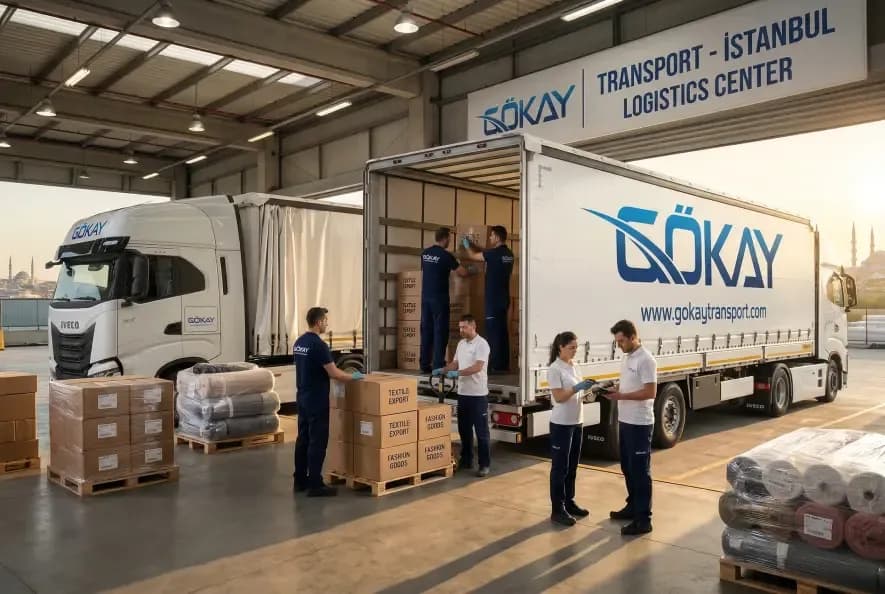
Turkey shipped 26 billion dollars worth of textiles and apparel in 2025. The majority of this cargo travels by road to European markets such as Germany, Italy, the Netherlands and the United Kingdom. Textile export freight — choosing the right carrier is the key to getting your products to the buyer on time, crease-free and intact.
Gökay Transport has been providing specialist freight solutions to textile exporters since 2010. With hanging garment TIRs, boxed and palletised transport, groupage and full-load options, we operate regular services to 14 countries. You can browse our general freight services on our international freight rates page.
Textile Export Freight Rates 2026
Route | Full Truckload (EUR) | Transit Time |
|---|---|---|
Istanbul — Germany | 4,500 - 5,000 | 4–6 days |
Istanbul — Italy | 4,000 – 4,500 | 3–5 days |
Istanbul — France | 5,200 – 6,500 | 5–7 days |
Istanbul — Netherlands | 5,000 - 6,000 | 5–7 days |
Istanbul — United Kingdom | 6,000 – 7,500 | 6–8 days |
Denizli — Germany | 5,500 – 6,500 | 5–7 days |
Bursa — Italy | 4,000 – 5,000 | 3–5 days |
Textile export rates vary according to cargo volume, route, vehicle type and season. The figures above are current 2026 ranges. We share this information with you transparently — something none of our competitors do.
Important Note: Rates vary depending on cargo volume, seasonal demand, fuel costs and whether a hanging garment or boxed vehicle is required. We recommend requesting a tailored quote for your specific shipment.
How Much Does Groupage Textile Freight Cost?
Route | Groupage Rate (EUR/pallet) |
|---|---|
Turkey — Germany | 400 |
Turkey — Italy | 350 |
Turkey — France | 450 |
Turkey — Netherlands | 400 |
Turkey — United Kingdom | 500 |
Groupage textile freight lets you send smaller batches economically. For loads under 10 m³ groupage is always the better choice. For smaller consignments you can save money with groupage shipping. Istanbul–Germany textile freight lane has a weekly scheduled groupage service.
To receive a tailored price for your textile cargo, contact us via WhatsApp or call us directly on +90 533 302 33 10.
What Is Textile Freight and Why Does It Matter?
Textile freight is the logistics service that covers the safe transport of product groups such as apparel, fabric, yarn, accessories and home textiles from the point of production to the buyer. Within international textile transport specifically, road haulage is by far the most preferred mode.
Turkey ranks among the top 5 countries in global textile exports. As one of Europe's largest textile suppliers, hundreds of thousands of tonnes of textiles are shipped from production centres such as Istanbul, Denizli, Bursa and Izmir to Europe every week. Road textile transport has become the industry standard, thanks to its advantages of door-to-door delivery, flexibility and speed.
Textile products require protection from moisture, creasing and dust. For this reason, textile product transport demands specialist expertise and equipment that goes beyond standard cargo haulage. Solutions such as hanging garment TIRs, climate-controlled vehicles and specialist packaging meet these requirements.
Types of Textile Freight and Transport Methods
There are four main transport methods in the textile sector. Choosing the right method according to product type, volume and budget saves both cost and time. Apparel freight, fabric freight and ready-to-wear freight each have different requirements, and we offer tailored solutions for all of them.
What Is Hanging Garment Transport and How Does It Work?
Hanging garment transport is a specialist method in which clothing items are carried on hanging rails without folding. It is ideal for crease-sensitive items such as jackets, shirts, dresses and coats.
Hanging garment vehicle technical specifications:
- 2–3 tier rail system: Hanging rail fixtures mounted on steel rails inside the trailer body
- Air circulation: Ventilation system preventing moisture build-up
- Capacity: A single hanging garment trailer holds approximately 2,500–3,000 items of clothing (total payload 18–22 tonnes)
- Crease-free delivery: Items are delivered directly to the retailer on hangers, eliminating ironing/pressing costs
Hanging garment vehicle specifications also include a humidity control range (40–60% relative humidity) and a dust-protection filter. These features are of critical importance particularly for branded ready-to-wear freight shipments.

Boxed and Palletised Transport
For folded items (T-shirts, underwear, socks, home textiles), boxed transport is the most suitable method. Products are packed in cardboard cartons, stretch-wrapped and secured on pallets. For high-volume orders, palletised transport is preferred; it enables fast loading and unloading by forklift. Among textile product packaging methods, vacuum pouches, polythene wrapping and corner protectors are the most widely used.
Fabric and Roll Fabric Transport
Fabric freight service: rolls of fabric are handled with special care. Every roll is wrapped in polythene and stretch film to protect against moisture and dust. The capacity of one TIR is approximately 25–28 tonnes of fabric. The highest fabric export volumes originate from Denizli, Bursa and Gaziantep.
Groupage vs. Full Truckload for Textiles — Which Is Right for You?
Criterion | Groupage | Full Truckload |
|---|---|---|
Cargo volume | 1–10 m³ (collection samples, small batch) | 50 m³+ (seasonal shipment) |
Price | €150–€400/pallet | €2,500–€5,500 |
Transit time | +1–2 days (consolidation wait) | Direct delivery |
Security | Shared with other cargo | Single loader, full control |
Due to seasonal pressure in the textile sector, full truckload is generally preferred. However, for small batches and sample shipments, groupage is far more economical. For a detailed comparison, take a look at our full truckload vs. groupage guide.
How to Export Textiles — The Process Step by Step
The textile export process consists of 7 key steps from order confirmation to delivery. Let us answer the question how to export textiles in practical terms:
- Order confirmation and production: Price, quantity and delivery terms (Incoterms) are agreed with the buyer.
- Quality control: Products are inspected for export compliance (certifications such as OEKO-TEX and ISO 9001).
- Packaging: Products are packed according to type — hanging garment, boxed or palletised.
- Document preparation: Invoice, packing list, ATR, certificate of origin and CMR are prepared.
- Customs declaration: The export declaration is filed via the BİLGE system.
- Loading and dispatch: The vehicle arrives at the factory or warehouse, loading takes place and the shipment departs.
- Delivery and confirmation: The cargo is delivered to the buyer and the CMR consignment note is signed.
Textile Export Requirements and Conditions
Textile export conditions require the following documents and registrations:
- Textile Exporters' Association (TİB) membership — mandatory for export registration
- Tax certificate and trade registry gazette
- Signature circular
- EORI number (mandatory for exports to EU countries)
- Capacity report and quality certificates (OEKO-TEX, ISO 9001)
For a detailed document list and preparation guide, you can visit our export documents guide page.
Do you have questions about the textile export process? Let our expert team assist you: +90 533 302 33 10.
What Are the Required Textile Export Documents?
Textile export documents comprise 8 mandatory items. Here is a brief explanation of what each one does:
- Commercial Invoice: Contains the value of the goods, and the buyer and seller details.
- Packing List: Shows carton, pallet, quantity and weight details.
- ATR movement certificate: Provides customs duty exemption for EU countries — critical in textile exports.
- Certificate of origin: Proves that the product is of Turkish origin.
- CMR consignment note: The official document for road transport.
- Customs declaration: Prepared via the BİLGE system.
- Consolidation list: Mandatory for groupage shipments.
- Insurance policy: CMR or All Risks cover certificate.
For full details and sample forms for all documents, visit our customs procedures guide page.
ATR and Certificate of Origin — Why Are They Critical for Textiles?
The ATR certificate provides customs duty exemption under the customs union between Turkey and the EU. Customs duty rates in the textile sector range from 8–12%; without the ATR certificate, your buyer pays this rate as an additional cost. Customs procedures in textile exports depend heavily on this document.
The certificate of origin, meanwhile, proves that the product was manufactured in Turkey. In textiles, the “sufficient processing” rule applies: apparel produced from imported fabric is considered of Turkish origin (cutting, sewing and finishing operations constitute sufficient processing).
Textile Freight Routes and Transit Times
Main European Routes — Germany, Italy, France, the Netherlands
Destination Country | Route | Transit Time | Frequency |
|---|---|---|---|
Germany | Kapıkule — Bulgaria — Serbia — Hungary — Austria | 4–6 days | 3x per week |
Italy | Kapıkule — Greece — RoRo or road | 3–5 days | 2x per week |
France | Kapıkule — Bulgaria — Serbia — Hungary — Austria — France | 5–7 days | 2x per week |
Netherlands | Kapıkule — Bulgaria — Serbia — Hungary — Austria — Netherlands | 5–7 days | 2x per week |
United Kingdom | Kapıkule — European transit — Calais/Dover | 6–8 days | 1x per week |
Germany is the largest market for Turkish textile exports. For detailed route information on the Istanbul–Germany lane, visit our Germany freight rates page. For RoRo alternatives on the Italy lane, our Italy freight page provides full details.
On the transit corridor, Bulgaria road route and Romania transit route are used as alternatives. The Greece transit route towards Italy is also part of our active network.

Denizli, Bursa, Izmir — Departures from Turkey's Textile Hubs
A large proportion of textile exporters produce outside Istanbul. Gökay Transport carries out regular loading from Turkey's main textile centres:
- Denizli textile freight: Fabric and home textiles hub. 5–7 days to Germany. Loading 2 days per week (Tuesday and Thursday).
- Bursa textile freight: Apparel and automotive textiles hub. 3–5 days to Italy. Loading 2–3 days per week.
- Izmir textile freight: Ready-to-wear and denim export centre. 1–2 days to Greece, 5–6 days to Germany. Loading 2 days per week.
- Istanbul textile export freight: Loading every weekday from Istanbul's textile districts of Merter, Laleli, Güngören and İkitelli. Our highest-volume departure point.
In the fashion calendar, S/S (Spring/Summer) collection shipments peak from January to March, and F/W (Autumn/Winter) collection shipments peak from July to September. Early booking during these periods is a distinct advantage.
To receive the most suitable route and price quote for your textile cargo from your city, request a free quote.
Why Gökay Transport? — What Sets Us Apart in Textile Freight
Textile freight carriers — 6 key advantages that set Gökay Transport apart:
- L2 Authorisation Certificate and U.NET Registration: With our L2 authorisation certificate approved by the Ministry of Transport and Infrastructure and our U.NET document registered in the UNECE TIR system, your cargo is covered by full legal protection. Among textile export carriers the number of companies holding this certificate is extremely limited.
- CMR Insurance on Every Shipment: Every textile consignment is transported under CMR insurance cover. Your high-value apparel shipments are protected with a compensation limit of 8.33 SDR/kg. For more information, refer to our CMR insurance and compensation coverage guide.
- Live GPS Tracking: All our vehicles are equipped with a live GPS tracking system. You can see in real time where your textile cargo is and communicate a firm delivery date to your buyers.
- 16 Years of Industry Experience: Since 2010 we have completed thousands of textile shipments without incident. Whether hanging garment, boxed or palletised — our experienced team is at your service for every type of textile logistics solution.
- Network Spanning 14 Countries: We operate scheduled textile freight services to 14 countries, including Germany, Italy, France and the Netherlands. Our Balkan network, including our North Macedonia freight service and Kosovo freight lane, is also fully active.
- Weekly Scheduled European Departures: With our confirmed Wednesday and Friday departures designed to meet the seasonal demands of the textile industry, we deliver your cargo on time.
Textile freight carriers or textile export companies — if you are looking for the most reliable service, Gökay Transport is the right choice. We stand by you with our leading position in the industry and our comprehensive service network.
For your textile freight needs, get a quote via WhatsApp now.

What to Watch Out for in Textile Transport
Because textile products are fragile, 6 critical points must be observed during transport. These rules in the textile warehousing and dispatch process guarantee that your cargo arrives in perfect condition:
- Crease prevention: Hanging garment transport is ideal for apparel. For folded items, cartons must be packed tightly and any gaps filled with air cushioning.
- Protection from moisture and humidity: Silica gel sachets should be placed in cartons and a ventilated vehicle should be used. Humidity should be kept between 40–60%.
- Temperature control: High temperatures create a risk of deformation in synthetic fabrics (polyester, nylon). In summer, a refrigerated or climate-controlled vehicle may be used.
- Protection from dust and contamination: Every product should be wrapped in a polythene bag. Hanging garments should be covered with garment bags.
- Labelling and barcoding: Label information must comply with destination country standards (composition, washing instructions, CE marking).
- Loading order: Heavy cartons should be placed at the bottom and light, crease-sensitive items at the top. Hanging items must be transported in a separate compartment.
How to Choose a Textile Freight Company
The key criteria to watch for: 7 critical checks:
- L2 authorisation certificate check: Proves that the company holds the licence for international road haulage. Legal transport cannot be carried out without this certificate.
- Hanging garment capacity: If you are shipping apparel, ask whether the company has a fleet of hanging garment TIRs.
- Departure frequency and route network: Does the company have weekly scheduled services to your target country? How long is the consolidation waiting time?
- Insurance coverage: CMR insurance is mandatory. Is All Risks additional cover also offered for high-value cargo?
- Live GPS tracking: Can you track your cargo in real time? Can you provide your buyer with a firm ETA?
- References and experience: Which companies in the textile sector has the carrier previously worked with? How many years have they been operating in this field?
- Price transparency: Are there any hidden costs? Does the price include customs clearance, warehousing and insurance?
Gökay Transport meets all 7 of these criteria and is one of the leading textile freight companies in the industry. With 16 years of experience, our L2 authorisation certificate and our own fleet of vehicles, we are a reliable business partner. We stand out in the industry with our on-time delivery commitment.
If you are looking for the right textile freight company, message us on WhatsApp and we will provide a bespoke solution.
What Are the Incoterms Delivery Terms in Textile Exports?
Incoterms | Description | For the Textile Exporter |
|---|---|---|
EXW | Ex Works — buyer bears all costs | Minimum responsibility, but buyer manages freight |
FOB | Free on Board — seller responsible to the loading point | Common when sea freight is used |
CIF | Cost, Insurance and Freight — seller covers freight and insurance | When the buyer wants reduced risk |
DAP | Delivered at Place — seller organises freight | Most common in road textile transport |
DDP | Delivered Duty Paid — seller bears all costs including customs | Full service, highest cost |
Incoterms delivery terms in textile exports determine the allocation of cost and risk between buyer and seller. Gökay Transport provides services under EXW, DAP and DDP. DAP is the most widely chosen delivery term in road textile transport; the seller organises the freight and the buyer pays only the customs duty.
To discuss delivery terms and freight planning, call us: +90 533 302 33 10.
Frequently Asked Questions (FAQ)
How much does textile freight cost?
As of 2026, full truckload textile freight rates range from €2,500 to €5,500. On the Istanbul–Germany lane rates are approximately €3,300–€4,900 and on the Istanbul–Italy lane approximately €2,500–€3,800. Groupage textile freight rates range from €150 to €350 per pallet. The main factors that affect pricing are cargo volume, route, season and vehicle type.
How does hanging garment transport work?
Hanging garment transport is a specialist method in which clothing items are carried on hanging rails without folding. Vehicles with 2–3 tier rail systems are used. A single TIR holds approximately 2,500–3,000 garments. Items are delivered directly to the retailer on hangers, eliminating ironing and pressing costs.
What documents are required for textile exports?
Textile export documents include: commercial invoice, packing list, ATR movement certificate (for EU countries), certificate of origin, CMR consignment note, customs declaration and a consolidation list for groupage shipments. The ATR certificate provides customs duty exemption for EU destinations. Please visit our full textile export documents checklist page for details.
How do I choose a textile freight company?
When choosing a textile freight company, check 7 criteria: L2 authorisation certificate, hanging garment capacity, departure frequency, CMR insurance coverage, GPS tracking capability, references and price transparency. Compare quotes from companies that meet all of these criteria.
How much does groupage textile freight cost?
Groupage textile freight rates range from €150–€350 per pallet or €100–€150 per m³. Groupage is more cost-effective for loads under 10 m³, while a full truckload is more economical for loads over 30 m³. For collection samples or small-batch shipments, groupage is always the better option.
How do I ship textile cargo abroad?
For small-volume shipments (1–5 cartons) abroad, groupage freight is used; for large-volume shipments a full truckload is used. Gökay Transport offers both options via weekly European services. Dedicated hanging garment TIRs are allocated for hanging garment consignments.
How are customs procedures handled in textile exports?
The customs declaration is filed via the BİLGE system. The ATR certificate provides customs duty exemption for EU countries. The certificate of origin proves the Turkish origin of the goods. Gökay Transport manages the entire process on your behalf through its customs clearance partners. For details, visit our detailed customs procedures guide page.
Which vehicle type should be chosen for textile transport?
Apparel (ready-to-wear): hanging garment TIR. Folded items (T-shirts, underwear): curtainsider/mega trailer. Roll fabric: standard curtainsider. Temperature-sensitive synthetic textiles: refrigerated/climate-controlled vehicle. Small batches: minivan or groupage. Vehicle selection must be made according to product type and volume.
How many days does textile freight from Istanbul to Germany take?
Transit time from Istanbul to Germany by road is 4–6 working days. Route: Kapıkule — Bulgaria — Serbia — Hungary — Austria — Germany. Customs procedures and seasonal demand can affect the duration. Our weekly scheduled services make planning straightforward.
What are the insurance coverages in textile freight?
CMR insurance is mandatory for all road shipments and offers a compensation limit of 8.33 SDR per kilogram. Additional All Risks insurance is recommended for high-value textile cargo. Gökay Transport carries all shipments with CMR insurance. For details, refer to our freight insurance types and coverage guide.
What are the Incoterms delivery terms in textile exports?
The most common in textiles: EXW (Ex Works — buyer bears all costs), FOB (Free on Board), DAP (Delivered at Place — seller organises freight), DDP (Delivered Duty Paid — seller bears all costs including customs). Gökay Transport provides services under EXW, DAP and DDP.
Is textile freight from Denizli to Europe available?
Yes, Gökay Transport provides regular textile freight services from Denizli to Europe. Our Denizli textile freight lane is particularly heavily used for fabric and home textile exports. The transit time from Denizli to Germany is 5–7 working days. We have a loading programme from Denizli 2 days per week.
Do you have further questions about textile freight? Message us on WhatsApp or call our line on +90 533 302 33 10. Our professional team will get back to you as soon as possible.

Frequently Asked Questions
As of 2026, full truckload (FTL) textile freight rates range from €2,500 to €5,500. On the Istanbul–Germany lane rates are approximately €3,300–€4,900 and on the Istanbul–Italy lane approximately €2,500–€3,800. Groupage (LTL) textile freight rates range from €150 to €350 per pallet. The main factors that affect pricing are cargo volume, route, season and vehicle type.
Hanging garment transport is a specialist method in which clothing items are carried on hanging rails without folding. Vehicles with 2–3 tier rail systems are used. A single trailer holds approximately 2,500–3,000 garments. Items are delivered directly to the retailer on hangers, eliminating ironing and pressing costs entirely.
Textile export documents include: commercial invoice, packing list, ATR movement certificate (for EU countries), certificate of origin, CMR consignment note, customs declaration, and a consolidation list for groupage shipments. The ATR certificate provides customs duty exemption for EU destinations. Please visit our full textile export documents checklist page for details.
Groupage textile freight rates range from €150–€350 per pallet or €100–€150 per m³. Groupage is more cost-effective for loads under 10 m³, while a full truckload is more economical for loads over 30 m³. For collection samples or small-batch shipments, groupage is always the better option.
Related Articles
Bulgaria Freight 2026 | Daily Scheduled Departures & Freight Rates
Full-load, part-load, and refrigerated transport solutions from Istanbul to Sofia starting from €200. Browse our current rate sheet for safe, fast delivery.
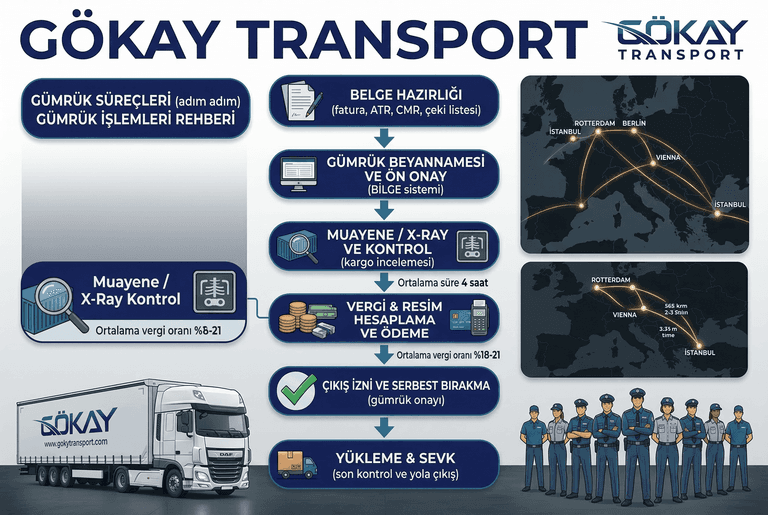
Customs Procedures Guide: Everything You Need to Know About Road Freight (2026)
How are customs procedures handled in road freight? 2026 customs broker fees, border crossings, and required documents — call us for a free consultation.
Food Export & Refrigerated Transport Guide: Prices, Documents and Cold Chain Logistics 2026
Refrigerated transport prices 2026: country-by-country cold chain shipping rates, ATP certificate, food export documents. Call now for a free quote.
Get in Touch
Available 24/7
You can reach us by email, by phone, or by filling out the form on this page. We aim to respond to your messages as quickly as possible and look forward to connecting with you!
Frequently Asked Questions (FAQ)Write to Us
We would love to hear from you!