
Freight Insurance Guide: CMR, Cargo and Carrier Liability Insurance 2026
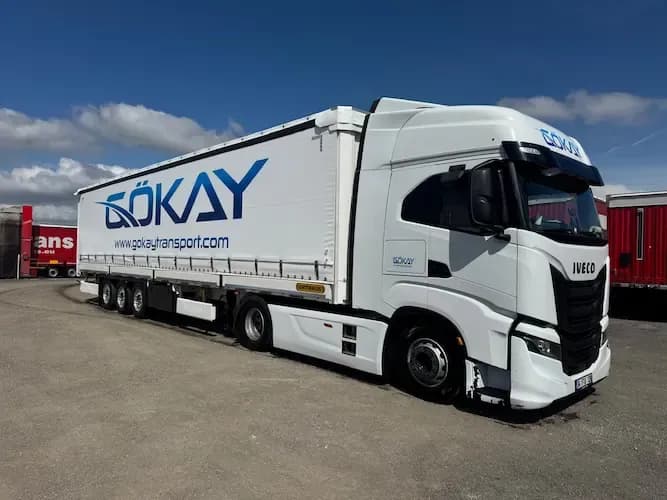
Freight insurance is the guarantee for your cargo in international road transport. If you are planning a shipment from Turkey to Europe or the Caucasus, it is critically important to understand the differences between CMR insurance and cargo insurance, to choose the right cover and to protect your rights in the event of damage. In this guide we explain freight insurance types, 2026 current rates, SDR calculation examples and the claims process from the perspective of a freight company. As Gökay Transport, we have provided CMR insurance on every shipment since 2010; you can also explore our general service network on our international transport guide page.
Freight Insurance Rates 2026: Premium Rates and Calculation
Freight insurance premiums vary according to the type of goods, their value, the route and the type of cover selected. As of 2026, average market premium rates are summarised in the table below.
Insurance Type | Premium Calculation Basis | Average Premium Rate | Cover Limit |
|---|---|---|---|
Cargo (Comprehensive Cover / All Risks) | Cargo value | 0.3% – 2% | Cargo value |
Cargo (Basic Cover) | Cargo value | 0.1% – 0.5% | Cargo value |
CMR (Carrier Liability) | Annual gross freight | Variable | EUR 2,000,000/vehicle |
TMM (Domestic Carrier) | Annual turnover | Variable | According to policy limit |
Important Note: The rates above are average values for 2026. The actual premium amount varies depending on the type of goods, packaging quality, route risk and the insurance company's policy. Be sure to request a quote for accurate freight insurance pricing.
CMR insurance premiums are calculated as a specific percentage of the carrier company's annual gross freight earnings. Companies operating with a floating policy gain a significant cost advantage over single-trip policies. Carrier liability insurance premiums are similarly dependent on the company's revenue volume and claims history.
Would you like a CMR-insured shipping quote for your cargo? Message us on WhatsApp now or call +90 533 302 33 10 directly.
What Is SDR? Compensation Calculation Example with Current Exchange Rate
CMR insurance calculation — when carrying out this calculation, the SDR is the most critical unit. SDR (Special Drawing Rights) is the international unit of account defined by the IMF. Under the CMR Convention, the carrier's compensation limit is capped at 8.33 SDR per kilogram.
Freight insurance calculation example (at March 2026 exchange rates):
- Cargo weight: 10,000 kg
- SDR limit: 10,000 × 8.33 = 83,300 SDR
- Current SDR/TRY rate: approximately TRY 48 (CBRT, March 2026)
- Maximum compensation: 83,300 × 48 = approximately TRY 4,000,000
If this limit falls below the actual value of your cargo, it is additionally recommended that you take out cargo insurance. How much does CMR insurance pay — the answer depends directly on the weight of the cargo and the current SDR exchange rate.

What Is Freight Insurance?
Freight insurance is a type of policy that protects the goods being transported or the carrier's liability against the risks of damage, loss and delay that may arise during the transport process. Also known as cargo insurance, this type of cover is an indispensable layer of security in international road transport.
It has two primary parties: the cargo owner (exporter or importer) takes out cargo insurance to protect the full value of their goods. The carrier company protects its own legal liability with CMR insurance. As Gökay Transport, every shipment we handle includes CMR insurance and we charge no additional fee for this service.
Freight Insurance Types: CMR, Cargo and TMM Comparison
Freight insurance types fall into three main categories. The table below clarifies who is protected by each, what is covered and when each should be preferred. The choice of insurance by transport type may also vary depending on whether you opt for full truckload (FTL) or part load (LTL).
Feature | CMR Insurance | Cargo Insurance | TMM (Domestic) |
|---|---|---|---|
Who is protected | The carrier | The cargo owner | The carrier |
What is covered | Damage caused by the carrier's fault | Cargo damage / loss | Domestic transport damage |
Compensation limit | 8.33 SDR/kg | Full cargo value | According to policy limit |
Compulsory | Effectively compulsory (L2 requirement) | Optional | Optional |
Scope | International (CMR countries) | All modes of transport | Domestic road |
Taken out by | Carrier company | Exporter / importer | Carrier company |
For high-value cargo, the CMR compensation limit (8.33 SDR/kg) may not cover the actual value of the goods. In this case, arranging both cargo insurance and CMR insurance together is the most reliable solution.

What Is CMR Insurance? Coverage Scope and Limits
CMR insurance is a type of policy that covers a carrier's financial liability towards the cargo in international road transport. CMR stands for "Convention on the Contract for the International Carriage of Goods by Road" — the international convention on road freight contracts. Turkey is a party to this convention, which was signed in Geneva in 1956. In the logistics industry, when people ask what CMR is, they mean both this convention and the associated insurance policy.
What does CMR insurance cover? It covers cargo damage, loss and delay resulting from the carrier's fault. Cover is valid from the moment the cargo is handed over to the carrier until it reaches the consignee. The per-vehicle cover limit is generally EUR 2,000,000, and the per-kilogram compensation limit is 8.33 SDR.
L2 operating licence holders are effectively required to hold CMR insurance. Every company registered in the U.NET system with international transport authorisation is obliged to take out this insurance. For this reason, it is very important that you choose a serious and professional freight company when looking for companies that provide CMR insurance.
All our shipments are covered by CMR insurance. For route-specific pricing, message us on WhatsApp.
What Does CMR Insurance Not Cover? (Exclusions)
As with every type of insurance, CMR insurance has its exclusions. CMR insurance general conditions — the following situations are excluded from cover:
- Force majeure: War, civil war, natural disaster, nuclear hazard
- Shipper's fault: Inadequate or defective packaging, incorrect declaration
- Deterioration due to the nature of the goods: Shipment of perishable products under unsuitable conditions
- Latent defect: Defects in the cargo that existed before transport
- Indirect losses caused by delay: Indirect losses such as loss of market or loss of profit are generally excluded
What Is Cargo Insurance? Total Loss, Basic and Comprehensive Cover
Cargo insurance is a type of insurance that protects the full value of the cargo owner's (exporter's or importer's) goods against the risks of damage, loss and theft. Unlike CMR insurance, the compensation limit equals the actual market value of the goods.
There are three main clauses according to scope of cover:
- Comprehensive Cover (ICC-A / All Risks): Covers all risks. The highest-premium but most comprehensive type of cover. Under the cargo all-risks insurance general conditions, every loss that is not specifically excluded is paid.
- Basic Cover (ICC-B): Covers specific risks such as fire, collision, sinking and overturning. The premium rate is lower than comprehensive cover.
- Total Loss Clause (ICC-C): Covers only the total destruction of the goods. The cargo insurance total loss clause is the lowest-premium but most limited option.
Is cargo insurance compulsory? It is not legally mandatory, but it is strongly recommended especially for high-value cargo. Under CIF delivery terms, the seller is obliged to take out cargo insurance.
Freight Insurance General Conditions (TSB)
Freight insurance general conditions are determined by the Insurance Association of Turkey (TSB). The main points to note under the freight insurance general conditions TSB regulations are:
- Cover begins and ends on a warehouse-to-warehouse basis
- The insured party is under a declaration obligation (type of goods, value, packaging)
- Loss notification must be submitted within 3 days of identifying the damage
- The period for filing a compensation claim is limited by the statute of limitations stated in the policy
Among the policy types available are the single-trip policy (one-off), the floating policy (fixed period, multiple trips) and the subscription policy (for continuous shipments). Under the cargo subscription insurance general conditions, regular exporters gain a cost advantage.
What Is Carrier Liability Insurance? Differences Between Domestic and International
Carrier liability insurance is a type of policy that covers the financial liability of the carrier company arising from damage caused to the cargo during transport. It has two sub-categories:
International carrier liability insurance (CMR insurance): applicable to international road haulage subject to the CMR Convention. The compensation limit is 8.33 SDR/kg, per vehicle EUR 2,000,000.
Domestic carrier liability insurance (TMM — Carrier Financial Liability): applicable to road transport within Turkey's borders. The domestic carrier liability insurance general conditions differ from CMR; the compensation limit is capped at the amount specified in the policy.
Road transport financial liability insurance covers both types within the general framework. For companies engaged in international shipping, CMR insurance is sufficient; for those operating only domestically, TMM is adequate. In choosing carrier financial liability insurance, your company's area of operation is the deciding factor.
To plan your shipment and receive an insurance-inclusive quote, contact us.
Incoterms and Freight Insurance: Who Should Take Out Insurance?
International cargo insurance — one of the most frequently asked questions on this topic is "Who will take out the insurance?" The answer depends on the delivery terms (Incoterms) in the sales contract. For shipments to EU countries such as our Greece freight services and Italy freight routes, the choice of Incoterms directly determines insurance responsibility.
Incoterm | Insurance Responsibility | Risk Transfer Point | Recommendation for Exporter |
|---|---|---|---|
EXW | Buyer | At factory gate | Buyer should arrange their own insurance |
FOB | Buyer | After loading onto vessel | Buyer should take out cargo insurance |
CIF | Seller (mandatory) | Up to port of destination | Seller must provide minimum ICC-C cover |
DAP | Seller | Up to destination point | Seller should opt for comprehensive cover |
DDP | Seller | Delivery including customs | Seller assumes all risks |
Important Note: Whichever Incoterm you use, CMR insurance is always taken out by the carrier company. As Gökay Transport, CMR insurance is our standard service on regular routes to 14 countries.
Whichever delivery terms you ship under, CMR insurance comes from us. For detailed information, you can call +90 533 302 33 10.

What to Do in the Event of Damage? Step-by-Step Claims Process
When damage occurs in international freight, acting correctly and quickly directly affects your chances of receiving compensation. Below, the process is described step by step using a CMR insurance example.
- Damage Assessment and Documentation: If there is damage when the cargo is delivered, photograph and video it immediately. A damage note must be entered on the CMR document; the phrase "received without damage" must under no circumstances be signed.
- Notification to Insurance Company (Within 3 Days): From the date of identifying the damage, 3 business days submit written notification to the insurance company within this period. Delayed notification may adversely affect your right to compensation.
- Document Collection: As outlined in our guide on customs procedures and documents, prepare your customs declaration and other official documents in full.
- Expert Inspection: The insurance company appoints an independent expert. The expert determines the cause and extent of the damage and the amount of compensation.
- Compensation Calculation and Payment: In CMR insurance, compensation is capped at 8.33 SDR/kg. In cargo insurance, it is calculated on the full value of the goods. Payment is generally made within 30–60 days.
Example Scenario: Under our Germany freight service, damage was identified on a shipment sent from Istanbul to Frankfurt comprising 5,000 kg textile export cargo, during transit via our Bulgaria freight route. CMR compensation: 5,000 × 8.33 = 41,650 SDR (approximately TRY 2,000,000). Our GPS live-tracking data pinpointed the exact location and time of the damage — this data accelerated the expert report.
Documents Required for a Damage File
The following documents are required for a damage file in international transport:
- Commercial invoice
- CMR document (with damage note entered)
- Packing list
- Customs declaration
- Damage assessment report
- Expert report
- Accident report (if applicable, in the event of a road accident)
- Photographs and video recordings
- Copy of insurance policy

What Is a CMR Document? Who Issues It and What Must It Contain?
A CMR document is an international road consignment note and serves as the legal proof of the transport contract. It is frequently confused with CMR insurance; however, the two are entirely different concepts. CMR insurance is the policy that covers the carrier's financial liability.
Who issues the CMR document? The carrier company issues it. The document is prepared in 3 original copies: one is retained by the consignor, one by the carrier and one by the consignee. The answer to when the CMR document is issued is: at the moment the cargo is handed over to the carrier.
The information that must appear on a CMR document is as follows:
- Name and address of consignor and consignee
- Place of loading and place of delivery
- Description, weight and packaging type of goods
- Freight charges and payment terms
- Carrier company details
- Date and place of issue
- Special instructions (if any)
CMR document example — international forms containing 24 standard data fields are used. You can also find detailed information about other foreign trade documents in our export documents guide.

The Gökay Transport Difference in Freight Insurance
companies that provide CMR insurance — what sets Gökay Transport apart is that we offer freight and insurance as a single, integrated service. Insurance companies only sell policies; we transport your cargo, arrange its insurance and guide you through the process in the event of a claim.
- CMR Insurance Included on Every Shipment: CMR insurance is our standard service on every international shipment — no additional charge.
- L2 Operating Licence and U.NET Registration: We hold all the legal documents required for international transport. Working with companies that do not hold an L2 licence puts your insurance cover at risk.
- GPS Live Tracking: Every vehicle in our own fleet is equipped with a GPS tracking system. This both reduces the risk of damage and speeds up the insurance expert process.
- Experience Since 2010: With 16 years of experience, we have completed thousands of shipments. Our expert team in claims management is with you at every step of the process.
- Regular Routes to 14 Countries: Thanks to our weekly fixed-departure schedules, we benefit from floating policy advantages — and we pass this cost advantage on to our customers.
- Professional Packaging and Storage: At our own warehouse in Ataşehir, Istanbul, your cargo is packaged and stacked in accordance with insurance requirements.
For safe, CMR-insured, GPS-tracked freight to 14 countries, get a quote now. Experience our industry-leading approach to service for yourself.
Insurance Requirements for Specialist Cargo Types
Not every type of cargo is transported under the same insurance conditions. Additional cover and documentation may be required for specialist cargo types. Insurance for part loads also differs from full truckload (FTL) transport.
Cold Chain Insurance for Refrigerated Transport
cold chain transport operations require, in addition to standard CMR insurance, a temperature deviation cover is recommended. The use of ATP/FRC-certified vehicles directly affects the insurance conditions. Data logger records serve as critical evidence in proving damage. In the event of a cold chain break, the claims process operates differently from a standard damage case.
Insurance for Household Goods Removals
household goods removal insurance cover requires a declared value to be provided for personal belongings. Additional cover should be requested for high-value items such as antiques, works of art and electronics. The packaging standard directly affects the validity of the insurance policy; there is a risk of claims rejection for items not professionally packaged.
If you would like an insurance-inclusive transport solution for your specialist cargo, ask for details via WhatsApp.
Frequently Asked Questions (FAQ)
What is freight insurance and what does it do?
Freight insurance is a type of policy that protects the goods being transported or the carrier's liability. Cargo insurance protects the cargo owner; CMR insurance protects the carrier. In international trade, it minimises the risks of cargo damage, loss and delay.
What does CMR insurance cover and what does it exclude?
CMR insurance covers damage, loss and delay caused by the carrier's fault. Force majeure events (war, natural disaster), defective packaging by the shipper and spoilage due to the nature of the goods are excluded. The compensation limit is 8.33 SDR/kg.
How much does cargo insurance cost in 2026?
Cargo insurance premiums vary depending on the goods and the type of cover. Cargo insurance premiums range between 0.1%–2% of the cargo value. CMR insurance premiums are calculated as a percentage of annual gross freight earnings. Comprehensive cover is more expensive than basic cover. Request a quote for an exact price.
How is freight insurance calculated?
Cargo insurance: cargo value × premium rate. CMR compensation calculation: weight (kg) × 8.33 SDR × current exchange rate. Example: for a 10,000 kg shipment, the maximum CMR compensation is 83,300 SDR, approximately TRY 4,000,000 (at March 2026 exchange rates).
Is cargo insurance compulsory?
Cargo insurance is not legally mandatory, but it is strongly recommended. CMR insurance is effectively compulsory as a requirement of the L2 operating licence. Uninsured international transport carries serious legal and financial risk. The most accurate answer to whether cargo insurance is compulsory: yes for CMR, no for cargo — but it is definitely recommended.
What is a CMR document and who issues it?
A CMR document is an international road consignment note and is issued by the carrier company. It consists of 3 original copies: consignor's, carrier's and consignee's. It is a different document from CMR insurance. You can also read our foreign trade documents guide.
What is the difference between CMR insurance and cargo insurance?
CMR insurance protects the carrier's liability and the compensation limit is capped at 8.33 SDR/kg. Cargo insurance covers the full value of the goods. CMR insurance is taken out by the carrier; cargo insurance is taken out by the exporter/importer. For high-value cargo, it is recommended to arrange both.
What should I do in the event of damage?
Assess and photograph the damage, submit written notification to the insurance company within 3 days, collect the required documents (invoice, CMR document, customs declaration, expert report) and await the expert inspection. Gökay Transport guides its customers step by step through the claims process. For any questions, message us on WhatsApp.
What is the difference between total loss, basic cover and comprehensive cover?
Comprehensive cover (ICC-A / All Risks) covers all risks. Basic cover (ICC-B) covers specific risks such as sinking, fire and collision. Total loss (ICC-C) covers only the total destruction of the goods. In ascending order of price: total loss, basic cover, comprehensive cover.
Under what circumstances does a CMR document become invalid?
A CMR document may be deemed invalid if it contains incomplete or incorrect information, was issued by an unauthorised person or has been tampered with. It is particularly critical that the cargo description, weight and delivery point details are accurate. An invalid CMR document directly and adversely affects the insurance claims process.
How does insurance work for cold chain transport?
For refrigerated transport, a standard CMR insurance supplement of temperature deviation cover is recommended. The use of ATP/FRC-certified vehicles affects the insurance conditions. Data logger records are used as critical evidence in proving damage. For detailed information, please review our refrigerated transport guide.
Who takes out cargo insurance — the exporter or the carrier?
It depends on the Incoterms: under CIF the seller is obliged to take out insurance; under EXW and FOB the responsibility lies with the buyer. CMR insurance is always taken out by the carrier company in every case. Gökay Transport offers quotes with CMR insurance included on all shipments. Request an insured freight quote now.
Frequently Asked Questions
Freight insurance is a type of policy that covers the goods being transported or the carrier's liability. Cargo insurance protects the cargo owner; CMR insurance protects the carrier. In international trade, it minimises the risks of cargo damage, loss and delay.
CMR insurance covers damage, loss and delay caused by the carrier's fault. Force majeure events (war, natural disaster), defective packaging by the shipper and spoilage due to the nature of the goods are excluded. The compensation limit is 8.33 SDR/kg.
Cargo insurance premiums vary depending on the goods and the type of cover. Cargo insurance premiums range from 0.1% to 2% of the cargo value. CMR insurance premiums are calculated as a percentage of annual gross freight earnings. Comprehensive cover is more expensive than basic cover. Request a quote for an exact price.
Cargo insurance is not legally mandatory, but it is strongly recommended. CMR insurance, however, is effectively compulsory as a requirement of the L2 operating licence. Uninsured international transport carries serious legal and financial risk. The most accurate answer to whether cargo insurance is compulsory: yes for CMR, no for cargo — but it is definitely recommended.
Related Articles
Bulgaria Freight 2026 | Daily Scheduled Departures & Freight Rates
Full-load, part-load, and refrigerated transport solutions from Istanbul to Sofia starting from €200. Browse our current rate sheet for safe, fast delivery.
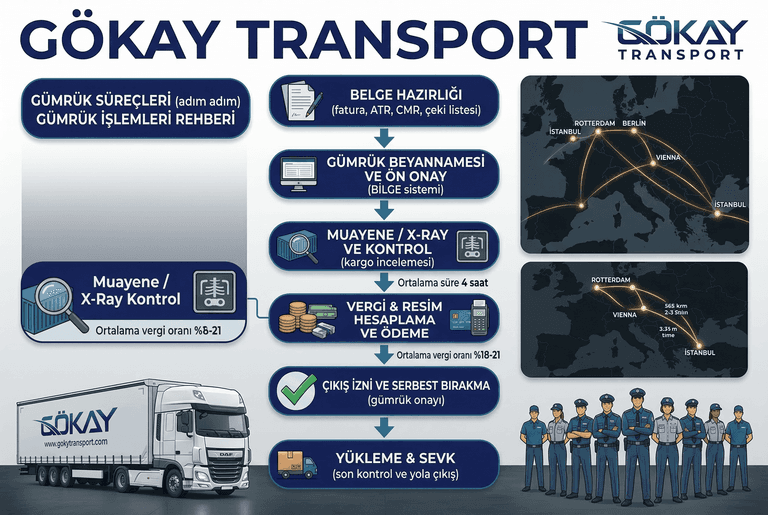
Customs Procedures Guide: Everything You Need to Know About Road Freight (2026)
How are customs procedures handled in road freight? 2026 customs broker fees, border crossings, and required documents — call us for a free consultation.
Food Export & Refrigerated Transport Guide: Prices, Documents and Cold Chain Logistics 2026
Refrigerated transport prices 2026: country-by-country cold chain shipping rates, ATP certificate, food export documents. Call now for a free quote.
Get in Touch
Available 24/7
You can reach us by email, by phone, or by filling out the form on this page. We aim to respond to your messages as quickly as possible and look forward to connecting with you!
Frequently Asked Questions (FAQ)Write to Us
We would love to hear from you!