
LTL & Groupage Logistics Guide: Minimise Your Freight Costs
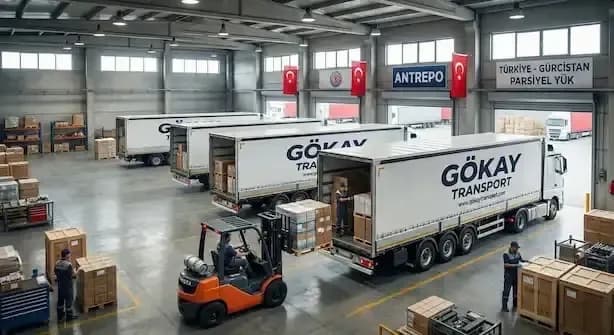
In today's accelerating global trade, logistics cost management and supply chain optimisation are the most critical factors directly affecting business profitability. Whether you are an entrepreneur engaged in e-commerce (micro-export) or a corporate company expanding into international markets, the most strategic way to ship goods without waiting to fill an entire truck (FTL) is: Partial-Load Shipping.
In this comprehensive guide, we will examine the technical details of partial-load transport — known in logistics as LTL (Less Than Truckload) and Groupage — how it can reduce your freight costs by up to 40%, and the consolidation criteria to look for when choosing a logistics partner.
What Is Partial Shipment (LTL)?
By industry definition, partial-load shipping is the process of combining cargo belonging to different customers — going to the same route — into a single transport unit (truck, container, or aircraft) by consolidating them together.
Once known simply as 'break-bulk shipping', this method is today a cornerstone of Just-in-Time production and distribution models. Why? Because instead of hiring the entire vehicle, you pay only for the volume (m³) or weight (kg) your cargo actually occupies, allowing you to use your budget efficiently.

Why Choose LTL Shipping?
LTL shipping is not merely a cost line — it is also an operational advantage:
For more detailed information, see the full truck vs. LTL comparison guide.
- Freight Optimisation: You pay for the Desi/Loading metre space you use, not the entire vehicle — minimising your per-unit transport cost.
- Inventory Management & Flexibility: You can ship on an order-by-order basis and at frequent intervals without incurring heavy stockholding costs.
- Environmental Sustainability: Maximising vehicle load factors reduces the number of trips and, consequently, your carbon footprint.
- ETGB & Micro-Export: Particularly for sample shipments or e-commerce consignments under ETGB (Electronic Commerce Customs Declaration), this is the fastest and most cost-effective solution.
How Is Partial Load & Dimensional Weight Calculated?
One of the most frequently searched logistics terms on Google is freight calculation methods. Professional logistics companies use the internationally standard Dimensional Weight (Desi) or Volumetric Weight formula when preparing quotations. For textile partial-load shipping calculations, you can refer to the relevant guide.
The industry standard for road LTL shipping is as follows:
- Volume Calculation (m³): Width (cm) × Length (cm) × Height (cm) / 1,000,000
- Dimensional Weight Conversion Factor: The road-freight standard is 1 m³ = 333 kg.
Key Tip: In logistics planning the "Bigger Wins" rule applies. If your cargo is 'light but bulky' (e.g. textiles), you are charged by volume; if it is 'heavy but compact' (e.g. metal spare parts), you are charged by weight.
Choosing a Logistics Partner: The Gökay Transport Difference

You will find hundreds of companies on the market promising 'cheap shipping'. However, in LTL transport the real issue is not cheapness — it is ensuring cargo does not get lost at transfer centres and that delivery is on time (Just-in-Time).
This is where Gökay Transport comes in. Leveraging our strong agency network on the Eastern Europe and Turkic Republics corridors, we transport your partial-load cargo via the safest routes.
Why Work with Gökay Transport?
- Extensive Service Network: We operate regular LTL departures not just on a single corridor, but to key European destinations such as Romania Freight and Bulgaria Freight.
- CMR Insurance Coverage: Your cargo is protected under international transport law and insurance.
- Expertise on Challenging Routes: Even on operationally demanding corridors — including conflict or crisis zones — such as Russia Freight and Armenia Freight, we deliver uninterrupted service.
- Transparent Tracking System: A technological infrastructure that lets you see in real time which warehouse or border crossing your cargo is at.
Unlike competitors, Gökay Transport also provides consultancy on complex customs procedures and documentation, reducing your operational burden. Get in touch.
Tips for a Successful LTL Operation
If you want to be a reliable shipper, pay attention to the following before handing cargo to your carrier:
- Correct Stowage: Follow palletisation standards to prevent your products from being damaged at transfer centres.
- Destination Knowledge: Familiarise yourself with the procedures of the destination country. For example, in Georgia Freight operations, congestion at the border crossing can affect delivery time, so plan accordingly.
- Document Compliance: It is essential that all documents — such as the commercial invoice and packing list — are complete and accurate.
Conclusion: Don't Let Borders Limit Your Trade
LTL shipping is the lifeblood of modern commerce. With the right strategy and a reliable partner like Gökay Transport, you can ship your products to any point in the world without the hassle of filling an entire truck.
If you want to cut your costs and entrust your logistics operations to professional hands, contact us today.
Frequently Asked Questions (FAQ)
1. How are partial-load (LTL) freight rates calculated?
In LTL shipping, costs are calculated based solely on the space your cargo occupies, since you are not renting the entire vehicle. Pricing uses the Dimensional Weight (Desi) formula. The road-freight standard is 1 m³ = 333 kg. Whichever is greater — the volume or the actual weight of your cargo — is used as the basis for the freight quotation.
2. Which countries can I ship to via LTL with Gökay Transport?
At Gökay Transport we serve a wide geographic network. We operate regular weekly departures on the Romania Freight and Bulgaria Freight corridors in particular. We also provide safe LTL transport to destinations that require operational expertise, such as Macedonia, Georgia, and Albania .
3. What is the delivery time (transit time) for partial loads?
Delivery times vary depending on the destination country and customs congestion. For example, shipments to Europe average 5–7 days, while deliveries on the Turkic Republics or Russia corridor can range from 8–12 days depending on distance and border-crossing conditions. Gökay Transport will transparently advise you of the estimated arrival time before your cargo departs.
4. Is there a risk of cargo mix-up or damage with LTL shipping?
With professional process management, this risk is reduced to a minimum. At Gökay Transport we track all cargo with a barcode system and transport it under international CMR Insurance coverage. Thanks to correct vehicle stowage (lashing) and careful handling at transfer centres, your goods arrive at the consignee in the same condition in which they were dispatched.
Frequently Asked Questions
In LTL shipping, costs are calculated based solely on the space your cargo occupies, since you are not renting the entire vehicle. Pricing uses the Dimensional Weight (Desi) formula. The industry standard for road freight is 1 m³ = 333 kg. Whichever is greater — the volume or the actual weight of your cargo — is used as the basis for the freight quotation.
At Gökay Transport we serve a wide geographic network. We operate regular weekly departures on the Romania Freight and Bulgaria Freight corridors in particular. We also provide safe LTL transport to destinations that require operational expertise, such as Russia, Georgia, and Armenia.
Delivery times vary depending on the destination country and customs congestion. For example, shipments to Europe average 5–7 days, while deliveries on the Turkic Republics or Russia corridor can range from 8–12 days depending on distance and border-crossing conditions. Gökay Transport will transparently advise you of the estimated arrival time before your cargo departs.
With professional process management, this risk is reduced to a minimum. At Gökay Transport we track all cargo with a barcode system and transport it under international CMR Insurance coverage. Thanks to correct vehicle stowage (lashing) and careful handling at transfer centres, your goods arrive at the consignee in the same condition in which they were dispatched.
Get in Touch
Available 24/7
You can reach us by email, by phone, or by filling out the form on this page. We aim to respond to your messages as quickly as possible and look forward to connecting with you!
Frequently Asked Questions (FAQ)Write to Us
We would love to hear from you!